Dimensional_Accuracy_Standards
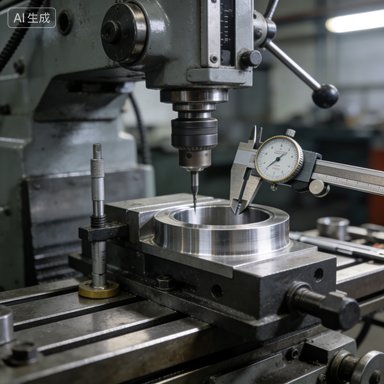
Breakthrough in Stamping Part Dimensional Accuracy: Domestic Enterprises Reach World-Class Standards
As high-end manufacturing demands increasingly higher precision for components, the dimensional and geometric accuracy of stamped parts has become an important indicator of enterprise technical capability. Recently, reporters visited several precision stamping enterprises and learned that leading domestic companies have fully aligned with international standards, with some indicators even exceeding global benchmarks.
Industry Standard System for Dimensional and Geometric Accuracy
According to industry experts, stamping part dimensional and geometric accuracy mainly includes three categories: dimensional accuracy, shape accuracy, and positional accuracy. The current internationally accepted standard systems mainly include:
1. Dimensional Accuracy Standards
Standard stamping parts follow GB/T 13914 “Dimensional Tolerances for Stamped Parts.” Precision stamping parts can achieve IT7-IT9 grade accuracy, with dimensional tolerances controlled within ±0.05mm. For high-end sectors such as automotive and electronics, some enterprises have achieved IT6 grade accuracy, with tolerances controlled within ±0.02mm.
2. Flatness Requirements
According to GB/T 1184 “Geometrical Tolerances,” precision stamping parts generally require flatness of 0.1mm/100mm, with high-precision products achieving 0.05mm/100mm. Aerospace-grade stamping parts require control within 0.02mm/100mm.
3. Concentricity and Perpendicularity
For stamping parts produced by multi-station progressive dies, hole concentricity can be controlled within 0.03mm, and perpendicularity error does not exceed 0.05mm. This level is on par with manufacturing powerhouses such as Germany and Japan.
4. Surface Roughness
Precision stamping parts generally require surface roughness Ra value of 1.6μm, precision machined surfaces can reach Ra0.8μm, and polished surfaces can achieve mirror finish of Ra0.4μm.
Technical Innovation Driving Accuracy Improvement
“The improvement of dimensional and geometric accuracy is inseparable from the synchronized upgrading of die manufacturing level and stamping equipment precision,” said the Technical Director of a well-known die enterprise. Using precision machining equipment such as wire EDM and coordinate grinding machines, combined with constant temperature workshop environment control, is the fundamental guarantee for achieving high precision.
Additionally, the application of online inspection technology has contributed significantly. Through coordinate measuring machines, optical projectors, and other equipment for full or sampling inspection of stamping parts, precision deviations can be promptly detected and adjusted to ensure product consistency.
Industry insiders point out that with the deepening of intelligent manufacturing, automatic inspection systems based on machine vision are gradually replacing manual inspection. While inspection efficiency has increased dozens of times, measurement accuracy has also become more stable and reliable.