Stainless_Steel_Scratch_Prevention
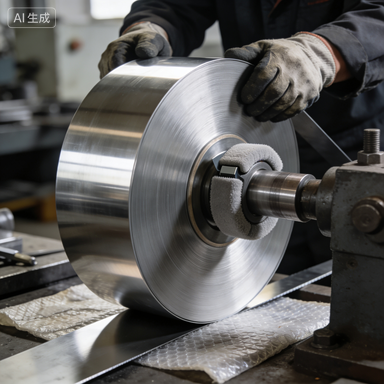
Surface Scratches on Stainless Steel Roll Formed Parts Troubling Enterprises: Experts Propose Full-Process Prevention Solutions
Stainless steel materials are widely used in architectural decoration, kitchenware, medical devices, and other fields due to their excellent corrosion resistance and aesthetic appearance. However, surface scratches are extremely easy to produce during stainless steel roll forming processing, seriously affecting product appearance quality. To address this industry pain point, experts have proposed prevention solutions covering the entire process.
Main Causes of Scratches
Material Factors: Raw material surfaces have scratches, indentations, and other defects; protective film quality is poor or not firmly attached.
Die Factors: Die surface roughness is too high; die material hardness is insufficient causing stainless steel material adhesion to the surface; dies have bump damage, rust, and other damage.
Process Factors: Poor lubrication causing direct metal contact; too fast roll forming speed causing local overheating and adhesion; workpiece scraping against equipment.
Operational Factors: Workpieces colliding with each other during handling; operator jewelry or tools scratching workpieces; improper stacking during storage causing indentations.
Full-Process Prevention Measures
1. Raw Material Management
Select stainless steel sheets with excellent surface quality, strictly inspect upon receipt, and reject materials with obvious surface defects. Require suppliers to apply high-quality protective film with thickness not less than 0.05mm and moderate adhesion.
Materials should be stored flat in dry, ventilated areas, avoiding mixing with other materials. Use specialized lifting equipment during handling; direct wire binding is prohibited.
2. Die Surface Treatment
Roll forming die working surface roughness should reach Ra0.8μm or below, with polishing treatment after precision machining. Die materials recommended are Cr12MoV or SKD11 steel, with heat treatment hardness reaching 58-62HRC.
Performing hard chrome plating or TD treatment on die surfaces can significantly improve surface hardness and anti-adhesion performance. Regularly check die surface condition and promptly repair or replace when damage is found.
3. Lubrication Technology Optimization
Select specialized stainless steel processing lubricants with good extreme pressure properties and film-forming ability. Water-soluble lubricants or dry film lubricants are recommended for easy subsequent cleaning.
Lubricant should be uniformly applied to the material surface, with special attention to high-stress areas on the outer side of bends. For products with extremely high surface requirements, film-protected bending process can be used, applying lubricant on the protective film for forming.
4. Process Parameter Control
Appropriately reduce roll forming speed to avoid heat from high-speed forming causing material-die adhesion. For mirror stainless steel, forming speed is recommended to be controlled at 50%-70% of ordinary materials.
Set reasonable bending corner radius to avoid surface scratching from excessive bending. Multi-pass progressive forming is more beneficial for surface quality control than single-pass forming.
5. Production Site Management
Establish dedicated stainless steel processing areas, strictly isolated from carbon steel and other materials to prevent iron particle contamination. Operators must wear clean white gloves; bare-hand contact with workpiece surfaces is prohibited.
Use specialized material racks for inter-process transfer, with soft materials separating workpieces. Finished products should be promptly packaged and warehoused to avoid prolonged exposure to workshop environment.
Industry experts emphasize that surface quality control of stainless steel roll formed parts is a systematic engineering project, requiring comprehensive control from multiple dimensions including materials, dies, processes, operations, and environment. Negligence in any stage may cause all previous efforts to be wasted.